Blog · Pickleball
Pickleball, shot by shot: how recreational players win more points and stay upright for years
The ready position, the serve and return, the dink, the third-shot drop, volleys, overheads and moving sideways, explained for recreational players, with the off-court training that keeps you on your feet.
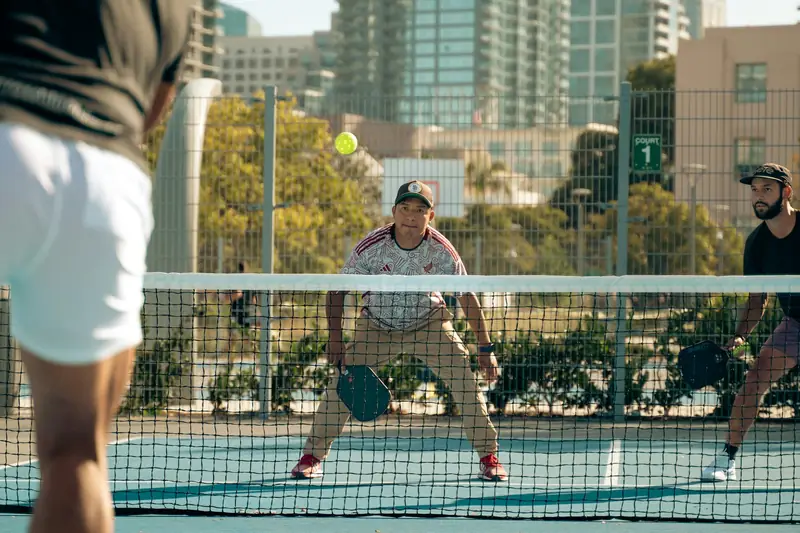
Every pickleball club has one. Seventy-odd, never seems to run, never seems to hit the ball hard, and somehow wins every long rally at the net. While everyone else is lunging and flailing, they just keep dropping the ball softly into the kitchen until someone younger and keener pops it up.
They aren't doing anything magic. They stand ready, get to the net, keep the ball low, let the hard ones go, and move with small, balanced steps instead of big reaches. This guide walks through the shots and movements that matter for recreational players: what each one is for, how to do it, the classic mistake, and what you can do off the court to make it easier on your body. Where the research has something useful to say, we say it, and every number links to the study it comes from.
The big idea: pickleball is a game of balance, not power
Pickleball has exploded. In the US alone, about 19.8 million people played in 2024, up 311% in three years.[1] It's easy to see why: the court is small, the ball is slow, and you can rally in your first hour.
It is real exercise. In 53 recreational players with an average age of 62, heart rates averaged about 111 beats a minute in both singles and doubles, and were at moderate intensity or above for more than 70% of the time they played.[2] In a six-week programme for inactive middle-aged and older adults, players jumped higher, did better on thinking tests and reported less pain, and most wanted to keep playing afterwards.[3] That was a small feasibility study, not a trial, but it fits what any club will tell you.
The catch is that the game rewards balance far more than speed, and most injuries come from losing it. So the qualities worth training are a stable low stance, quick small steps in every direction, legs that can stop you, and the strength to catch yourself.
Ready position and the split step
The ready position puts you in a balanced, athletic stance with the paddle up, so you can react to a fast ball without reaching. The split step is a small hop that lands just as your opponent hits, so your weight is centred and you can push off in any direction.
How to do it:
- Feet a little wider than your shoulders, knees soft, weight on the balls of your feet
- Paddle up in front of your chest, not hanging by your knees
- Hinge slightly at the hips, chest up, eyes on the ball
- Make a small split step just as your opponent makes contact
- Move after you land, not before, with short steps
The classic mistake is standing tall and flat-footed with the paddle down, then reaching or lunging for a ball you could have stepped to. That matters more in pickleball than almost anywhere else, because falls are the leading cause of injury. In an analysis of an estimated 66,350 emergency visits for pickleball injuries in the US between 2013 and 2022, 65.5% came from a fall, and most patients were aged 65 to 80.[4]
Train it off the court. A good ready position is a quarter squat you can hold and move out of. Bodyweight or goblet squats to a chair build the legs for it. Single-leg balance holds, calf raises and small pogo hops make the split step springy and the landing steady.
The serve and the return: deep, then forward
The serve is underhand, with contact below your waist, and goes diagonally into the opposite box. The ball must then bounce once on each side before anyone can volley it. That two-bounce rule shapes the whole game: the receiving team gets to the net first, and the serving team has to earn its way forward.
How to do it:
- Serve: a relaxed, pendulum swing from the shoulder, stepping through towards your target
- Aim deep and in, not hard. A serve that lands is worth more than one that might be an ace
- Return: hit it deep and high enough to clear the net comfortably, ideally to the backhand
- Then walk or jog forward to the kitchen line straight away, and split step as they hit
- Keep the return simple. Depth gives you time; power gives you errors
The classic mistake is hitting a good return and then admiring it from the baseline. The other is trying to blast the serve into the net. There is no real research on pickleball serving. This is coaching wisdom, and it holds up.
Train it off the court. The serve and return come from a small turn of the trunk and a step forward. Band rotations and open-book stretches keep your mid-back turning. Split squats build the front leg you step onto. A bit of brisk walking or easy cycling during the week means getting to the kitchen line isn't the hardest part of the point.
The dink and the kitchen
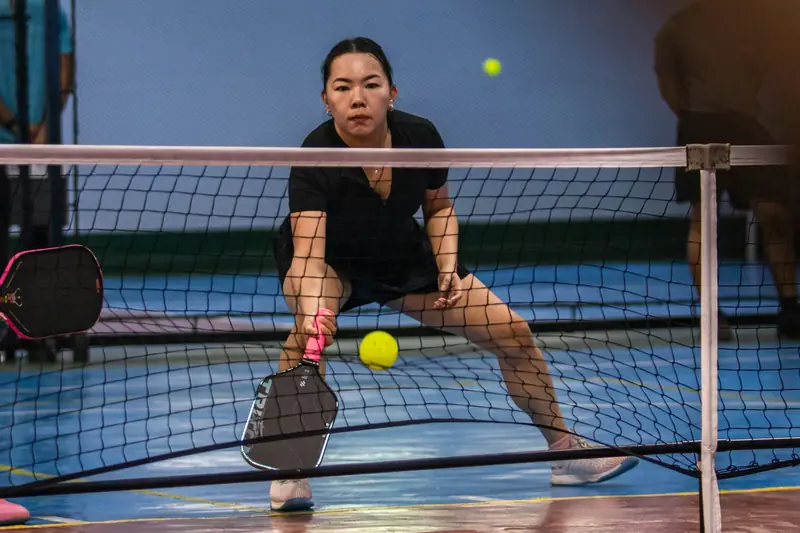
The non-volley zone, or kitchen, is the seven-foot strip on each side of the net where you can't volley. The dink is the soft shot you play into your opponent's kitchen so the ball bounces low and they have to hit up. Dinking is a patience contest. The first player to pop the ball up usually loses the point.
How to do it:
- Bend your knees, not your back, so your eyes come down towards the ball
- Open the paddle face slightly and lift the ball from your shoulder, with a quiet wrist
- Aim over the middle of the net, where it is lowest, and land it in the kitchen
- Keep your feet set before you hit, then reset to ready
- Stay behind the line. You can step in to play a ball that has bounced, but get out again before you volley
The classic mistake is bending from the waist with straight legs and flicking the ball with the wrist. You lose control, the ball floats up, and your lower back takes the strain. The other classic is volleying with a toe on the kitchen line, which is a fault. Doubles at the kitchen line is mostly tiny steps: in the same study of older players, doubles averaged about 2,800 steps an hour against more than 3,000 in singles.[2]
Train it off the court. Dinking is a long hold in a low stance. Wall sits, slow goblet squats and split-squat holds build the leg endurance to stay down for a long rally without your knees or back complaining. Romanian deadlifts teach the hip hinge, so you lower your chest by folding at the hips, not rounding your spine.
The third-shot drop
Because of the two-bounce rule, the serving team's first chance to attack is the third shot. The drop is the answer: a soft, arcing shot from the back of the court that lands in your opponent's kitchen, so they can't attack it and you have time to move forward.
How to do it:
- Get your feet set early and stay low
- Swing low to high from the shoulder, and let your legs do the lifting
- Aim for the top of the arc to be on your side of the net, so the ball drops as it crosses
- Hit it softer than you think. Margin over the net beats a perfect skim
- Follow it in, stopping to split step each time your opponent hits
The classic mistake is hitting the drop and sprinting to the net, then getting caught mid-stride with the ball at your feet. Move up in stages. There is a little science on this one. A physics model of the ball's flight found a successful drop needs to leave the paddle at about 24 to 29 miles an hour down the line, or about 30 to 36 cross-court, rising at an angle of roughly 12 to 23 degrees, and that spin matters much less than speed and angle.[5] It's a model, not a study of players, but the message is clear: a gentle, repeatable lift is the skill.
Train it off the court. A drop is a leg-driven lift followed by short sprints and stops. Goblet squats and step-ups build the lift. For the moving in, practise decelerating: three quick steps and a balanced stop, with hips back and knees over toes, so the split step comes easily.
Volleys and hand battles
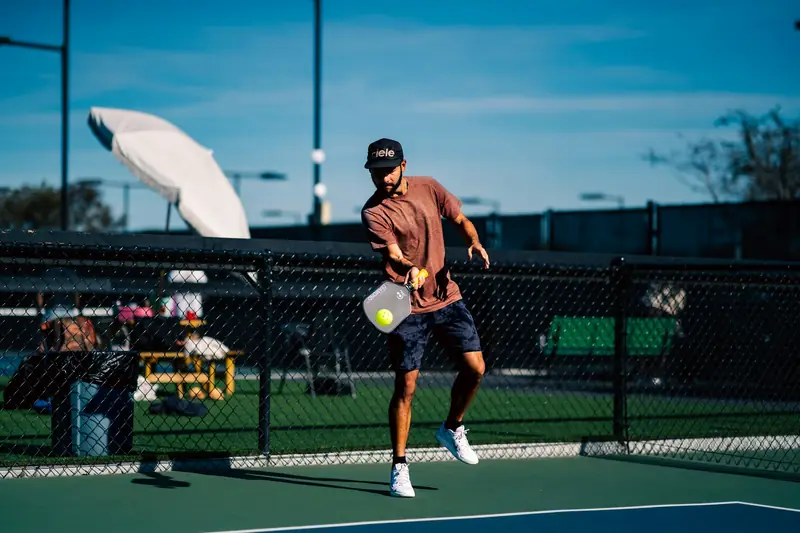
When all four players are at the kitchen line and someone speeds the ball up, you get a hand battle: fast volleys at close range. Compact technique matters more than reactions.
How to do it:
- Paddle up and in front, with the backhand side covering the middle of your body
- No backswing. Block or punch the ball with a short movement
- Contact in front of you, with a firm wrist and a relaxed grip
- Stay low and aim at your opponents' feet or hip, not their head
- Reset to ready after every ball
The classic mistake is a big swing, a death grip and a flicking wrist. It costs control, and it is the sort of repeated forearm strain that leads to tennis elbow. Pickleball elbow research is thin, but in tennis players the condition became more common, and more likely to come back, with age, and in older players a bigger grip went with more of it.[6] In recreational tennis, overuse problems such as tennis elbow are the typical arm injury.[7] The other classic mistake is standing tall at the line, so every fast ball arrives at your chest.
Train it off the court. Your forearm takes every volley, so give it some capacity: slow wrist extensions with a light dumbbell, wrist curls and farmer's carries. Band pull-aparts and rows strengthen the upper back that keeps the paddle in front of you.
Overheads and the backpedal: the classic fall
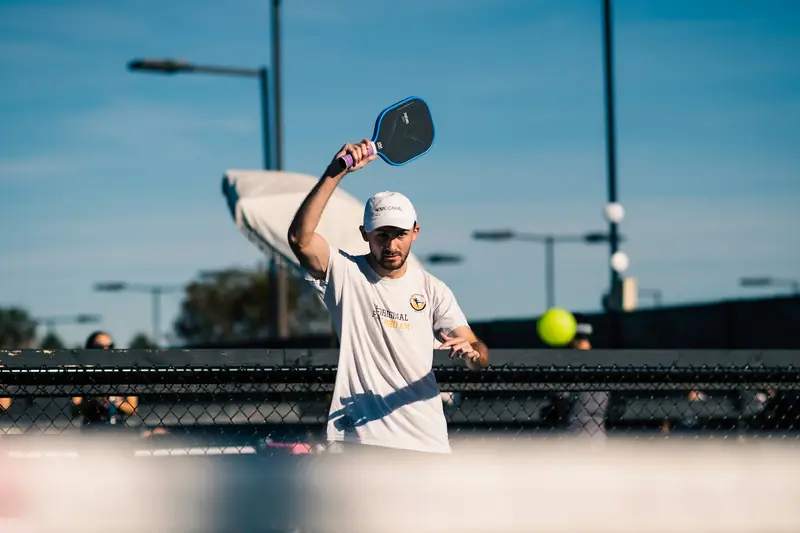
The overhead punishes a lob that comes back too short. It is also where the classic pickleball injury happens: a player walks backwards with their eyes on a lob, their heels catch, and they fall backwards onto an outstretched hand or the back of their head.
How to do it:
- Turn side-on as soon as you see the lob
- Move back with a shuffle or crossover step, never by walking backwards
- Point your free hand at the ball to line it up
- Hit it in front of you and aim down, at the feet or into the open court
- If it's over your head and deep, let it go, let it bounce, or let your partner take it
The classic mistake is backpedalling. Clinicians who treat pickleball players name it as the commonest way to fall, though that is experience, not data. The data do show how much falls cost. In an analysis of nearly 400 pickleball fractures seen in US emergency departments over 20 years, falls caused about 92%, the average patient was 66, 87% were over 60, 69% were women, and two-thirds of the fractures were in the arm or shoulder, against under a fifth in the leg.[8]
Train it off the court. Practise moving backwards, slowly at first: side-on shuffles and crossover steps along a line, then the same thing while tracking a ball thrown up by a partner. Single-leg balance and step-ups make it easier to catch yourself. Strength and impact work for your bones (more on that below) makes a fall less likely to end in a fracture.
Moving sideways: steps, not reaches
Most movement in pickleball is short and sideways along the kitchen line, or diagonal from the baseline into the court. Good movers take two quick steps where others take one big lunge.
How to do it:
- Shuffle for short distances, keeping your feet apart and never clicking them together
- Use a crossover step for longer distances, then shuffle to settle
- Push off the outside foot, keep your paddle up while you move
- Stop on two feet with your knees bent, not on one straight leg
- If you have to lunge, keep your front knee over your toes and come straight back
The classic mistake is reaching for a wide ball with your feet planted, so you either roll an ankle or go over. If you've sprained an ankle before, take note: in people from a range of sports with a recent sprain, eight weeks of home balance-board training cut repeat sprains by about a third.[9]
Train it off the court. Lateral lunges and banded side steps build the hips that push you sideways. Single-leg balance work protects the ankle. Calf raises, with straight and bent knees, prepare your calves and Achilles for all those small push-offs.
Does training off the court really help?
For falls, yes, and this is the strongest evidence in the whole guide. Across 59 trials in nearly 13,000 people aged 60 and over, exercise programmes cut the rate of falls by 23%, and programmes built on balance and functional exercises did slightly better.[10] No study has tested this on a pickleball court, but the people in those trials look a lot like your Tuesday-morning doubles group.
For bones, yes. In women past menopause with low bone density, eight months of twice-weekly heavy, supervised lifting and impact work improved bone density at the spine and hip compared with a control group.[11] Since nine in ten pickleball fractures come from falls, and most happen to women[8], stronger bones are worth having before you need them.
For injuries in general, probably. A review of 25 trials across many sports found strength training was the most protective type of injury-prevention programme.[12] The honest caveat is that racket-sport programmes don't always work: in a trial of 579 adult recreational tennis players, a 12-week online prevention programme did not reduce injuries.[13] Programmes that people actually do, and that make them stronger, seem to be the ones that pay off.
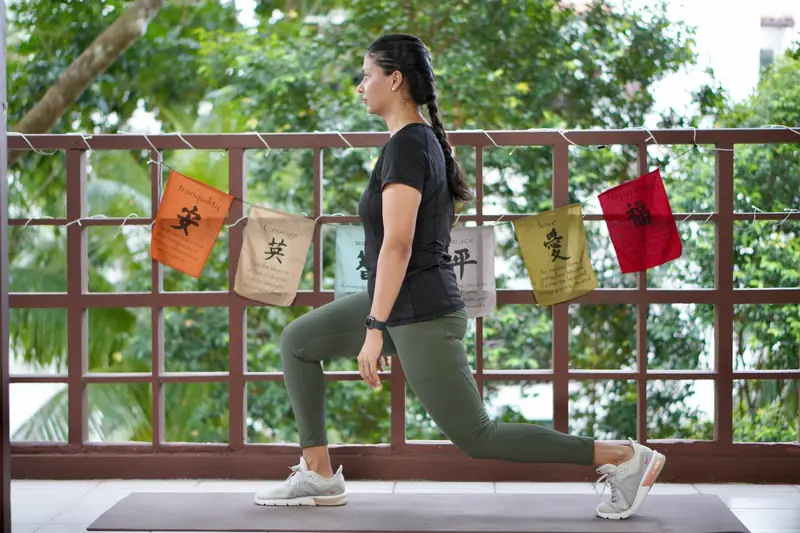
Two short sessions a week alongside your games is plenty to start. Here is how the work lines up with the game:
| Build this | It helps your | Try |
|---|---|---|
| Balance | Ready position, overheads, not falling | Single-leg holds, heel-to-toe walks, step-ups |
| Leg strength | Dinking stance, third-shot drop | Goblet squats, split squats, wall sits |
| Moving backwards and sideways | Lobs, wide balls, getting to the line | Side-on shuffles, crossover steps, lateral lunges |
| Calves and Achilles | Split step, push-offs | Straight- and bent-knee calf raises, pogo hops |
| Forearm and grip | Volleys, hand battles, the elbow | Slow wrist extensions, farmer's carries |
| Bone strength | A fall that doesn't become a fracture | Heavy lifts and impact work, progressed gradually |
Staying on the court
Pickleball injuries have risen as fast as the sport. In US emergency departments, an estimated 19,000 pickleball injuries were treated between 2001 and 2017, and over 90% of the patients were 50 or older.[14] Among players aged 60 and over, pickleball injuries had caught up with tennis injuries by 2018[15], and between 2020 and 2022 alone the yearly number of injuries rose by about 91% and hospital admissions by about 257%.[16] Much of that rise is simply far more older people playing, but it shows where the risk sits. In emergency departments, fractures and sprains or strains each account for about a third of visits[4], and a review focused on older players found sprains and strains the most common overall.[17] Five problems come up again and again.
Falls and wrist fractures. Covered above: turn, don't backpedal, and train balance and bone. In one health system's records, wrist fractures were among the most common pickleball diagnoses.[18] If your wrist is swollen, bruised or painful to grip after a fall, get it X-rayed rather than strapping it and playing on.
Ankle sprains. Wide balls and quick changes of direction, often on hard courts. Balance training, as above, is the most useful thing you can do after a sprain.[9]
The Achilles and calf. The same health-system records listed Achilles ruptures about as often as wrist fractures.[18] The classic story is a quick push-off to chase a drop shot. If you feel a kick or hear a pop in the back of your lower leg, stop playing and get it seen that day. No trial has shown how to prevent ruptures, but strong calves, a proper warm-up and a gradual return after time off are sensible. Big muscle tears happen too: one clinical review of the sport includes the case of a 71-year-old player who pulled a hamstring tendon clean off the bone.[19]
Tennis elbow. Elbow tendon pain made up about one in twenty diagnoses in the same records.[18] A relaxed grip, a paddle grip that fits your hand, and forearm strength help. If pain sticks around for more than a couple of weeks, cut back and get it looked at before it becomes a months-long problem.
The shoulder. Overheads and hard drives add up, especially if you also play tennis. Pickleball-specific evidence is lacking, but in elite handball players a short shoulder programme in the warm-up, three times a week, cut the share of players with shoulder problems at any one time to 17%, against 23% in teams without it.[20] Band work for the rotator cuff and upper back is cheap insurance.
And one that isn't an injury: if you get chest pain, unusual breathlessness or dizziness on court, stop and get seen straight away.
The long game
Racket sports go with a longer life. In more than 80,000 British adults, people who played racket sports had a 47% lower risk of dying during the study and a 56% lower risk of dying from cardiovascular disease than people who didn't.[21] In a Danish study, tennis and badminton players lived years longer than inactive people, and the researchers suspected the social side of these games was part of the reason.[22] These are observational studies of other racket sports, and the players were probably healthier to begin with. But pickleball has the same mix of movement, competition and company, and in the Utah study most new players wanted to keep going.[3]
About four and a half hours a week on court is roughly enough to meet the guidelines for moderate activity.[2] The off-court work in this guide is what keeps you upright, and playing, long enough to collect it.
Training built around your pickleball
Most pickleball players never do any of this, not because they don't care, but because it's hard to know where to start. A generic gym plan doesn't know you play doubles four mornings a week, that your elbow grumbles after a long session, or that you only have a resistance band and a pair of dumbbells at home.
Achilles does. Pick a goal such as Play my sport better, Stop getting injured or Stay capable as I age, and tell it how often you play, the time and equipment you have, and anything that bothers you, from a sore elbow to an old ankle sprain. Achilles builds your plan from a library of sports-science research: the balance work, the legs, calves, forearms and bones, and how to progress it, each exercise with its sets, reps and rest, and the studies behind it.
Log your sessions and your games, and the plan moves with you, so you keep getting stronger without overdoing the weeks you play the most.
See how Achilles worksFurther reading
- Sports & Fitness Industry Association (2025). Topline participation report, as reported by Pickleball.com: pickleball was the fastest-growing sport in the US for a fourth consecutive year. Link
- Webber S.C. et al. (2022). Physical activity intensity of singles and doubles pickleball in older adults. Journal of Aging and Physical Activity, 31(3). Link
- Wray P. et al. (2021). Pickleball for inactive mid-life and older adults in rural Utah: a feasibility study. International Journal of Environmental Research and Public Health, 18(16). Link
- Yu J. et al. (2025). Increasing incidence of pickleball injuries presenting to US emergency departments: a 10-year epidemiologic analysis of mechanisms and trends. Orthopaedic Journal of Sports Medicine, 13(1). Link
- Steyn D. et al. (2024). Executing a successful third shot drop in pickleball. arXiv preprint 2501.00163. Link
- Gruchow H.W. & Pelletier D. (1979). An epidemiologic study of tennis elbow: incidence, recurrence, and effectiveness of prevention strategies. American Journal of Sports Medicine. Link
- Abrams G.D., Renström P.A. & Safran M.R. (2012). Epidemiology of musculoskeletal injury in the tennis player. British Journal of Sports Medicine, 46(7). Link
- Ghattas Y. et al. (2024). Trends in pickleball-related fractures in the United States: an analysis of the 2002-2022 National Electronic Injury Surveillance System (NEISS) database. American Academy of Orthopaedic Surgeons Annual Meeting, poster abstract. Link
- Hupperets M.D.W., Verhagen E.A.L.M. & van Mechelen W. (2009). Effect of unsupervised home based proprioceptive training on recurrences of ankle sprain: randomised controlled trial. BMJ, 339. Link
- Sherrington C. et al. (2020). Exercise for preventing falls in older people living in the community: an abridged Cochrane systematic review. British Journal of Sports Medicine, 54(15). Link
- Watson S.L. et al. (2018). High-intensity resistance and impact training improves bone mineral density and physical function in postmenopausal women with osteopenia and osteoporosis: the LIFTMOR randomized controlled trial. Journal of Bone and Mineral Research, 33(2). Link
- Lauersen J.B., Bertelsen D.M. & Andersen L.B. (2014). The effectiveness of exercise interventions to prevent sports injuries: a systematic review and meta-analysis of randomised controlled trials. British Journal of Sports Medicine, 48(11). Link
- Pas H.M.I. et al. (2020). Effectiveness of an e-health tennis-specific injury prevention programme: randomised controlled trial in adult recreational tennis players. British Journal of Sports Medicine, 54(17). Link
- Forrester M.B. (2020). Pickleball-related injuries treated in emergency departments. Journal of Emergency Medicine, 58(2). Link
- Weiss H., Dougherty J. & DiMaggio C. (2021). Non-fatal senior pickleball and tennis-related injuries treated in United States emergency departments, 2010-2019. Injury Epidemiology, 8(1). Link
- Cheng R. et al. (2025). A substantial increase in injuries and hospitalizations associated with playing pickleball from 2020 to 2022. Arthroscopy, Sports Medicine, and Rehabilitation, 7(2). Link
- Touhey D.C. et al. (2024). Pickleball injuries in the aging athlete: a critical analysis review. Cureus, 16(9). Link
- Siow M., Zafar-Khan A. & Limpisvasti O. (2026). Pickleball related orthopaedic injury presentations to a large urban healthcare system from 2015 to 2024. American Academy of Orthopaedic Surgeons Annual Meeting abstract. Link
- Vitale K. & Liu S. (2020). Pickleball: review and clinical recommendations for this fast-growing sport. Current Sports Medicine Reports, 19(10). Link
- Andersson S.H. et al. (2017). Preventing overuse shoulder injuries among throwing athletes: a cluster-randomised controlled trial in 660 elite handball players. British Journal of Sports Medicine, 51(14). Link
- Oja P. et al. (2017). Associations of specific types of sports and exercise with all-cause and cardiovascular-disease mortality: a cohort study of 80,306 British adults. British Journal of Sports Medicine, 51(10). Link
- Schnohr P. et al. (2018). Various leisure-time physical activities associated with widely divergent life expectancies: the Copenhagen City Heart Study. Mayo Clinic Proceedings, 93(12). Link