Blog · Martial arts
Martial arts, move by move: how adult hobbyists hit harder, roll longer and stay on the mat
Stance, the jab and straight punch, kicks, breakfalls, guard and the shrimp, takedowns and conditioning for rounds, explained for adults who train jiu-jitsu, boxing, Muay Thai, kickboxing, karate or taekwondo, with the off-mat training that makes each one easier on your body.
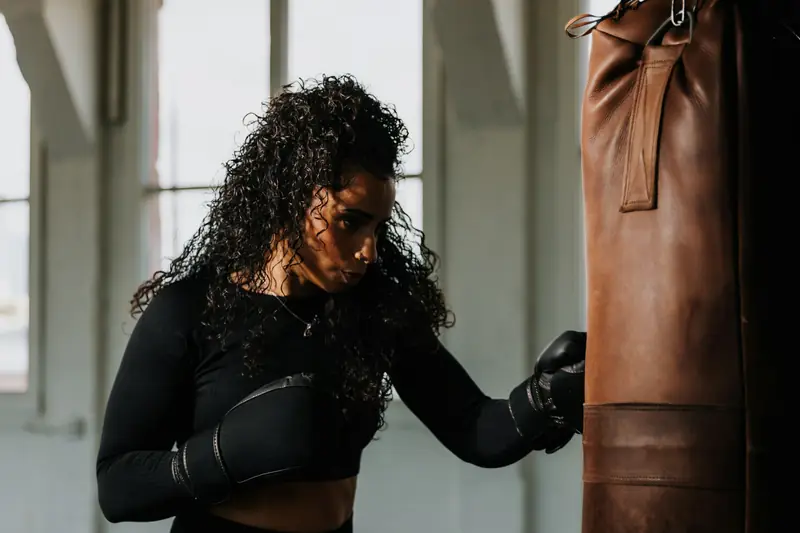
Every gym has one. Mid-forties, a bit grey at the temples, nothing flashy, and somehow you can never quite get hold of them. On the pads their jab snaps back before you see it coming. In the last round, when everyone else is hanging on the ropes or lying flat on the mat, they're still moving, still breathing, still making it look easy.
They aren't doing anything magic. They stand balanced, punch from the floor, kick from the hip, fall well and pace their rounds. This guide walks through the skills that matter for adults who train Brazilian jiu-jitsu, boxing, Muay Thai, kickboxing, karate or taekwondo as a hobby: what each one is for, how to do it, the classic mistake, and what you can do off the mat to make it easier on your body. Where the research has something useful to say, we say it, and every number links to the study it comes from.
The big idea: combat sports are interval sports
A round of sparring or rolling looks like a fight. To your heart and muscles, it is intervals: short bursts of all-out effort, a scramble, a breath, and again. In regional Brazilian jiu-jitsu fights, athletes spent about six times as long working as pausing, the hardest actions lasted around 4 seconds each, and their grip strength had dropped by the end.[1] In novice amateur boxing bouts of three two-minute rounds, blood lactate after the fight was close to 12 mmol/L, a sign of very hard work, and the winners threw and landed more, especially lead-hand punches and combinations.[2] In a simulated Muay Thai fight, heart rate and oxygen use stayed above the fighters' anaerobic threshold for the whole match.[3]
So what matters is producing force from the ground, holding strong positions, absorbing a fall or a hit, and recovering between bursts. All of it can be trained, at any age.
Stance and footwork: your base comes first
Every punch, kick, sprawl and escape starts from your stance. A good one keeps you balanced, mobile and a smaller target. Boxing, Muay Thai and karate stances differ a little, but the principles are the same.
How to do it:
- Feet about shoulder-width apart, lead foot forward, rear foot turned slightly out, like standing on the two sides of a railway track
- Knees soft, weight on the balls of your feet, spread roughly evenly between both legs
- Chin down, hands up by your cheekbones, elbows in to cover your ribs
- Step, don't cross. Move the foot nearest the direction you're going first, then bring the other one back to stance
- Small steps. Big ones leave you off balance for longer
The classic mistake is crossing your feet when you move sideways, or letting your stance narrow until a light push tips you over. The other is sinking onto your heels when tired. There is almost no research on stance in hobbyists. This is coaching wisdom, and it is good wisdom.
Train it off the mat. Footwork is a long series of small, quick, balanced steps. Skipping, split-squat holds, calf raises and lateral lunges build the legs for it. Single-leg balance work helps you stay steady when pushed off line.
The jab and the straight punch: from the floor, not the shoulder
The jab is the lead-hand straight punch, used to measure distance, score and set up everything else. The straight right (the cross, for an orthodox fighter) is the power shot from the rear hand. The power comes from the ground up: the feet push, the hips turn, the shoulder follows and the arm finishes the job.
How to do it:
- Jab: push off the rear foot, step with the lead foot and land the punch as the foot lands
- Cross: drive off the ball of the rear foot, turning the heel out as your rear hip turns towards the target
- Turn the fist over at the end so the palm faces down, lead shoulder up to protect your chin
- Breathe out sharply on every punch
- Bring the hand back along the same line, straight to your face, not dropped to your chest
The classic mistake is arm-punching: throwing from the shoulder with flat feet and still hips, which is weak and tires the shoulder. The other is dropping the non-punching hand, which is how most hobbyists get caught. In a study comparing elite and junior boxers' lead straight punches, the elites hit the target harder and pushed harder through their lead leg, though not through their rear leg.[4] It's a comparison, not proof that leg training adds power, but it fits what coaches teach about punching from the floor.
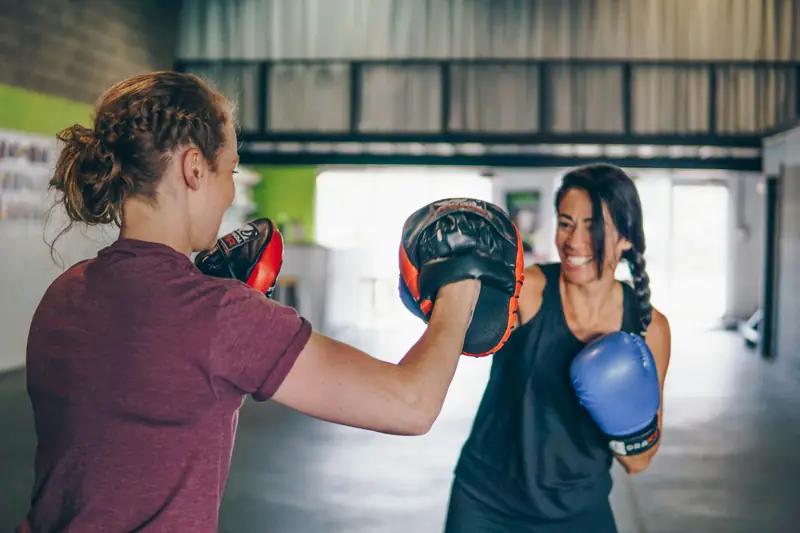
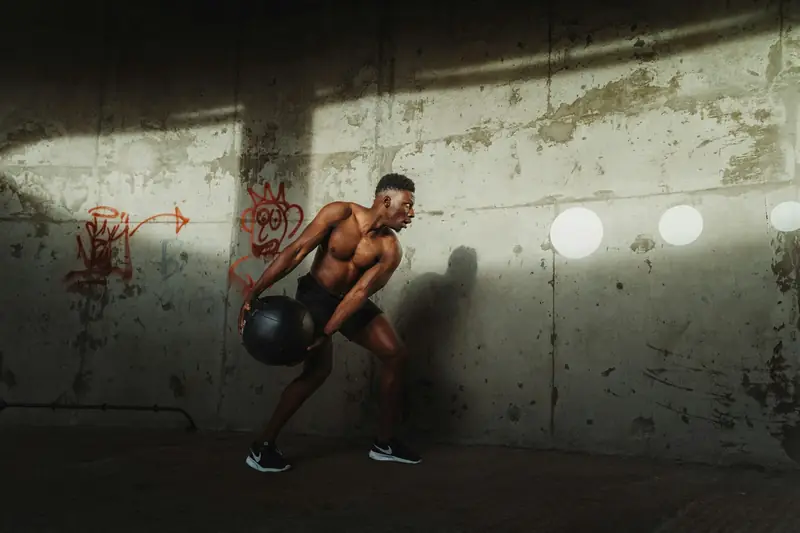
Train it off the mat. Punching power needs a fast hip turn on stable legs. Rotational medicine-ball throws against a wall, landmine presses and cable chops teach the hips to lead the arm. Split squats and trap-bar deadlifts build the push from the floor. Rows, face-pulls and rotator cuff work balance all that pushing.
Kicks: the hip, the pivot and the standing foot
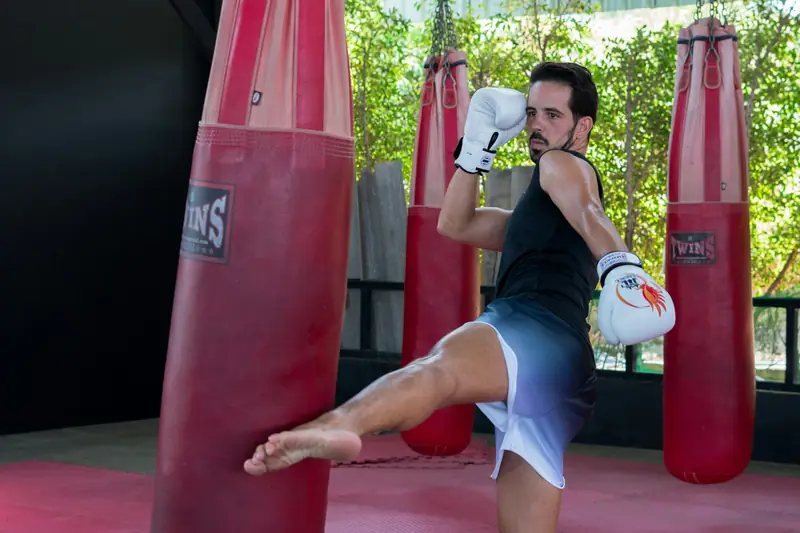
The roundhouse kick is the workhorse of Muay Thai, kickboxing, karate and taekwondo. It is powered by the hip turning over, and what makes it work is the leg you are standing on.
How to do it:
- Step out slightly at an angle with your lead foot to open your hips
- Pivot on the ball of your standing foot so the heel turns towards the target
- Turn the hip over and swing through. Let the hip lead, the knee and shin follow
- Strike with the shin (Muay Thai) or the instep (taekwondo, karate) and keep your guard up
- Return to stance quickly. A slow return is an invitation to get swept
The classic mistake is kicking with a planted standing foot that doesn't pivot. The hip can't turn over, the kick is weak, and the twist ends up in your standing knee. The other is kicking higher than your hips allow, so you lean back, round your lower back and lose balance. Lab studies back up the focus on the standing leg. In taekwondo athletes, changing the angle of the starting stance changed how much power the hip produced in the roundhouse kick, though not the top speed of the foot.[5] And in an analysis of the moments before the standing foot leaves the floor, it was the standing-leg hip extending that drove the pelvis forward, and the authors suggested coaches pay attention to the support leg.[6]
Train it off the mat. Kicks need hips that open and a standing leg that holds firm. 90/90 hip switches, Cossack squats and lateral lunges build usable range. Single-leg Romanian deadlifts and calf raises make the standing leg stronger. Banded knee raises and slow kicks held at the top build strength at the end of your range.
Breakfalls: learn to fall before you learn to throw
Breakfalls, or ukemi, are the skill of hitting the mat without getting hurt. In grappling you will fall hundreds of times, and strikers still slip, trip and get swept. A good breakfall spreads the impact and keeps your head off the floor.
How to do it:
- Tuck your chin to your chest, as if holding an orange under it
- Round your back and roll through it. Don't land flat like a plank
- On a back or side fall, slap the mat with your whole forearm and palm, about 45 degrees from your body
- Breathe out as you land
- On a forward roll, go diagonally over the shoulder, never over the top of your head
The classic mistake is posting a straight arm to catch yourself. That turns a harmless fall into a wrist, elbow or collarbone injury. The other is letting your head whip back into the mat. Falling technique has been tested in the lab. A review pooling 13 studies found that a martial arts roll gave the biggest reduction in impact of any strategy tested for sideways falls, while the slap on its own did not significantly reduce impact.[7] So the slap is part of the technique, not the whole of it. And in a small pilot with older adults, five training sessions cut impact at the hip by about 8% in a sideways fall from kneeling.[8]
Train it off the mat. A breakfall needs a neck that can hold your head tucked and a trunk that can stay rounded. Chin-tuck holds, hollow-body holds and dead bugs build both. Bridges help you get back up. The fall itself is trained on a mat, with a coach, starting from low down.
Guard, the bridge and the shrimp
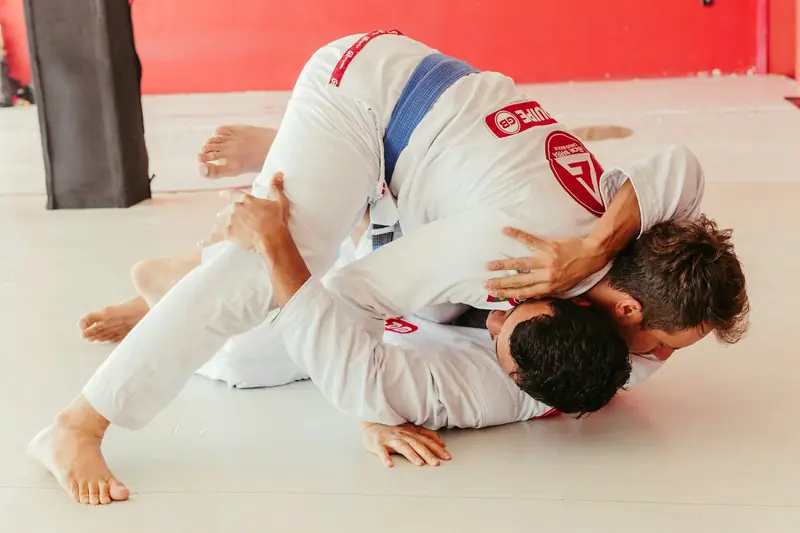
In jiu-jitsu, the guard is your legs between you and your opponent while you're on your back. It is your defence and your attack at the same time. The two movements that keep it alive are the bridge (upa), lifting your hips to knock someone off balance, and the shrimp (hip escape), sliding your hips away to make space.
How to do it:
- Bridge: feet flat and close to your backside, drive your hips up and over one shoulder, not straight up
- Shrimp: turn onto your side, push off one foot and slide your hips back and away
- Frame with your forearms and shins against their hips, neck and shoulders. Frames make space, they don't push
- Keep your elbows tucked in to your ribs
- Stay on your side, not flat on your back
The classic mistake is lying flat and pushing with straight arms. It doesn't move anyone, it wears you out, and a straight arm is exactly what an armbar needs. No study has measured the shrimp. This is the craft of the sport, passed from coach to student.
Train it off the mat. Bridges and shrimps are hip extension and side-on strength. Glute bridges, hip thrusts and single-leg bridges build the drive. Side planks and Turkish get-ups build the strength to work from your side. Copenhagen planks strengthen the inner thighs that squeeze a closed guard.
Takedowns and the sprawl
A good shot gets you in on the legs quickly, and a good sprawl stops someone else's. For hobbyists, the sprawl is the more useful one to learn first.
How to do it:
- Change levels by bending your knees, not your back
- Shoot with a long step, head up and tight to their body, hips under you
- Sprawl: kick your legs back and wide, drop your hips to the mat
- Make your chest heavy on their shoulders and keep your head up
- Get back to your feet or round to their back, don't lie there
The classic mistake is bending at the waist to shoot, which loads your lower back and leaves your head out in front, ready for a guillotine. On the sprawl, it's dropping straight onto your knees instead of kicking your legs back. Backs do take a beating in grappling. In a survey of 1,287 adult jiu-jitsu practitioners, more experienced players reported more lower-back injuries, while newer players reported more injuries to the head, arms and elbows.[9]
Train it off the mat. A takedown is a fast level change and a powerful drive forward. Front squats and Romanian deadlifts build the legs and the hinge. Sled pushes and loaded carries build the drive and the grip. Back extensions build lower-back endurance, and sprawls make a good conditioning finisher.
Conditioning for rounds
Gassing out is how most hobbyists lose a round, and it makes everything worse: your hands drop, your technique goes, and that's when injuries happen. You need an engine to keep going and the ability to recover between bursts.
How to do it:
- Train in rounds the same length as your sparring or competition, with the same rest
- Breathe out on every strike and every effort on the floor
- Relax between exchanges. Tense shoulders and a death grip burn energy
- Pace it. The first minute is not the whole round
- Keep at least one easy session a week where nobody is trying to win
The classic mistake is doing nothing but hard sparring and hoping it builds fitness, or doing nothing but long slow runs and wondering why three minutes on the bag still feels terrible. The Muay Thai research shows why you need both: after an initial burst of anaerobic work, the aerobic system supplied more and more of the energy as the match went on.[3] The jiu-jitsu data show where fatigue bites: grip strength fell over the fights.[1]
Train it off the mat. Intervals that match your rounds are the most specific work: three minutes hard, one minute easy, on a bike, rower or assault bike. One or two easy cardio sessions a week build the base that lets you recover between rounds. For grapplers, dead hangs, towel hangs and farmer's carries build grip endurance.
Does training off the mat really help?
For performance, it fits everything coaches teach and what the lab studies show, but the evidence is indirect. For injuries, the honest answer is that we found no trial in martial artists showing that a strength or warm-up programme prevents injuries. There is no combat-sports equivalent of the large injury-prevention trials that exist in football.
Neck strength is a good example. In a study of high school athletes, every extra pound of neck strength went with about 5% lower odds of concussion.[10] That was an association in other sports, not a trial, and nobody has shown that neck training prevents concussion in combat sports. Think of it as a stronger, steadier neck for grappling and breakfalls, not as protection against being hit.
Two short sessions a week alongside your classes is plenty to start. Here is how the work lines up with the skills:
| Build this | It helps your | Try |
|---|---|---|
| Hip rotation and range | Kicks, guard, hip escapes | 90/90 hip switches, Cossack squats, lateral lunges |
| Leg drive | Punches, takedowns, sprawls | Split squats, trap-bar deadlifts, sled pushes |
| Rotational power | Straight punches, hooks, kicks | Medicine-ball throws, landmine presses, cable chops |
| Neck and trunk control | Breakfalls, bridging, holding posture | Chin-tuck holds, hollow-body holds, side planks |
| Shoulder health | Punching, framing, posting | Band face-pulls, rows, rotator cuff work |
| Grip endurance | Gripping in the gi, clinching | Dead hangs, towel hangs, farmer's carries |
| Repeated efforts | The last round | 3 minutes hard, 1 minute easy; circuits with sprawls |
Staying on the mat
Injuries are common in combat sports, and most of them happen in training, not competition. In the survey of 1,287 jiu-jitsu practitioners, 59% had been injured at least once in the past six months, and the knee was the most common site. Injuries went up with more training days a week and down with more years of experience.[9] A review of seven studies covering 2,847 practitioners also found the knee, and the chest and ribs, among the most commonly injured areas.[11] In a Brazilian study of 108 jiu-jitsu athletes, beginners and advanced players alike most often reported shoulder and knee injuries.[12] At eight tournaments in Hawaii there were about 9 injuries needing on-site medical care for every 1,000 match appearances, so competition is less risky than it looks.[13]
The neck. Stacks, neck cranks, guillotines and bad falls all load the neck. In a survey at one club, nine out of ten members had been injured, mostly sprains and strains of the fingers, arms and neck.[14] Serious neck injuries in jiu-jitsu are rare, but they do happen.[15] Tap early to anything that bends your neck, and don't post on your head to avoid being rolled. If neck pain comes with pins and needles, numbness or weakness down an arm, stop and get it checked.
Shoulders. Kimuras, posting a hand on a fall and thousands of punches all add up. Tap early, learn to fall, and do your rotator cuff work. If your shoulder feels like it slipped out or you can't lift your arm, get it checked rather than training through it.
Knees. Grapplers twist their knees in guard, in leg locks and in takedowns. Strikers do it by kicking without pivoting, or by having a kick checked. Learn leg locks before someone uses them on you, tap early to heel hooks, and pivot on every kick. A pop followed by swelling and a knee that gives way needs a professional to look at it.
Hands and wrists. In five years of injury records from the Great Britain amateur boxing squad, the hand was the most commonly injured part of the body, in training and in competition.[16] Wrap your hands for every bag and pad session, make a proper fist with your thumb outside, and use bag gloves with enough padding. No trial has shown that wraps prevent injuries, but they keep your wrist straight and your knuckles together, and there's little reason not to wear them.
Fingers and toes. Gi grips jam fingers, and toes catch in the gaps between mats, so check the mats before you roll. Many grapplers buddy-tape sore fingers to their neighbour. In Muay Thai, injuries to the legs and feet were the most common in beginners, amateurs and professionals alike.[17]
Concussion. In the same Muay Thai study, head injuries were the second most common in amateurs and professionals.[17] Concussion doesn't need a knockout. If you take a knock to the head and feel dazed, dizzy, sick, get a headache or just don't feel right, stop training for the day and get checked. The international consensus on concussion in sport, agreed in Amsterdam in 2022, starts with a short period of relative rest and then a step-by-step return to sport.[18] The UK's guidance for grassroots sport puts it simply: if in doubt, sit them out. It says no training or competition within 24 hours of a suspected concussion, an assessment by a healthcare professional or a call to NHS 111 within 24 hours, then a graduated return to everyday activity and sport, with no return to competition before 21 days from the injury. If symptoms last longer than 28 days, it says to see your GP.[19] Its red flags, such as loss of consciousness, a seizure, vomiting, drowsiness or a headache that is severe or getting worse, mean urgent assessment at A&E, calling 999 if needed. For hobbyists the best habit is the cheapest: spar light, wear a mouthguard, and train with partners who want to see you next week.
The long game
Martial arts are among the few sports that welcome beginners in their forties and fifties and keep them for decades. A review of 28 studies of "hard" martial arts in adults found that most reported benefits to balance, thinking skills and mental health, even in people who started later in life, though the authors noted that many of the studies were weak.[20] Learning to fall well is a skill that pays you back well beyond the gym.[8]
The classic story is the hobbyist who trains five nights a week for three months, gets hurt, and never comes back. The off-mat work in this guide is what keeps you training long enough to collect all of those benefits.
Training built around your martial art
Most adults who train never do any of this, not because they don't care, but because it's hard to know where to start. A generic gym plan doesn't know you roll on Tuesdays and Thursdays and hit pads on Saturdays, that your neck gets stiff after a hard week, or that you only have a kettlebell and a pull-up bar at home.
Achilles does. Pick a goal such as Play my sport better, Stop getting injured or Get stronger, and tell it how often you train, the time and equipment you have, and anything that bothers you, from a sore shoulder to a knee that twinges in guard. Achilles builds your plan from a library of sports-science research: the warm-up, the work for your hips, legs, trunk, neck, shoulders and grip, and how to progress it, each exercise with its sets, reps and rest, and the studies behind it.
Log your sessions and your classes, and the plan moves with you, so you keep getting stronger without overdoing the weeks you train the most.
See how Achilles worksFurther reading
- Andreato L.V., Franchini E. et al. (2013). Physiological and technical-tactical analysis in Brazilian jiu-jitsu competition. Asian Journal of Sports Medicine, 4(2). Link
- Davis P., Wittekind A. & Beneke R. (2013). Amateur boxing: activity profile of winners and losers. International Journal of Sports Physiology and Performance, 8(1). Link
- Crisafulli A. et al. (2009). Physiological responses and energy cost during a simulation of a Muay Thai boxing match. Applied Physiology, Nutrition, and Metabolism, 34(2). Link
- Liu Y. et al. (2022). Biomechanics of the lead straight punch of different level boxers. Frontiers in Physiology, 13. Link
- Jandačka D., Estevan I., Janura M. & Falco C. (2013). The impact of the initial stance position on lower limb joint kinetics in the taekwondo roundhouse kick. Acta Universitatis Palackianae Olomucensis. Gymnica, 43(2). Link
- Kinoshita M. & Fujii N. (2014). Biomechanical analysis of taekwondo roundhouse kick focused on phase before toe off. ISBS Proceedings Archive, 32. Link
- Moon Y. & Sosnoff J.J. (2017). Safe landing strategies during a fall: systematic review and meta-analysis. Archives of Physical Medicine and Rehabilitation, 98. Link
- Groen B.E. et al. (2010). Martial arts fall training to prevent hip fractures in the elderly. Osteoporosis International, 21(2). Link
- Moriarty C., Charnoff J. & Felix E.R. (2019). Injury rate and pattern among Brazilian jiu-jitsu practitioners: a survey study. Physical Therapy in Sport, 39. Link
- Collins C.L. et al. (2014). Neck strength: a protective factor reducing risk for concussion in high school sports. Journal of Primary Prevention, 35(5). Link
- Santos S.P. et al. (2024). Epidemiology of injuries and their implications in jiu-jitsu practitioners: an integrative systematic review. Revista Brasileira de Ortopedia. Link
- da Silva Júnior J.N. et al. (2018). Injury prevalence in Brazilian jiu-jitsu athletes: comparison between different competitive levels. Revista Brasileira de Cineantropometria e Desempenho Humano, 20(3). Link
- Scoggin J.F. et al. (2014). Assessment of injuries during Brazilian jiu-jitsu competition. Orthopaedic Journal of Sports Medicine, 2(2). Link
- Petrisor B.A. et al. (2019). Injury in Brazilian jiu-jitsu training. Sports Health, 11(5). Link
- Ifrach J. et al. (2022). Cervical spine flexion-distraction fracture in a Brazilian jiu-jitsu athlete: a case report and literature review. Interdisciplinary Neurosurgery, 30. Link
- Loosemore M. et al. (2015). Boxing injury epidemiology in the Great Britain team: a 5-year surveillance study of medically diagnosed injury incidence and outcome. British Journal of Sports Medicine, 49(17). Link
- Gartland S., Malik M. & Lovell M. (2001). Injury and injury rates in Muay Thai kick boxing. British Journal of Sports Medicine, 35(5). Link
- Patricios J.S. et al. (2023). Consensus statement on concussion in sport: the 6th International Conference on Concussion in Sport, Amsterdam, October 2022. British Journal of Sports Medicine, 57(11). Link
- UK Concussion Guidelines for Non-Elite (Grassroots) Sport: If in doubt, sit them out (2023, updated November 2024). Link
- Origua Rios S., Marks J., Estevan I. & Barnett L.M. (2018). Health benefits of hard martial arts in adults: a systematic review. Journal of Sports Sciences, 36(14). Link