Blog · Basketball
Basketball, move by move: how pickup players score more, defend better and stay off the bench
Stance and defence, the first step, jumping and landing, shooting, layups and the euro step, explained for pickup and league players, with the off-court training that makes each move easier on your body.
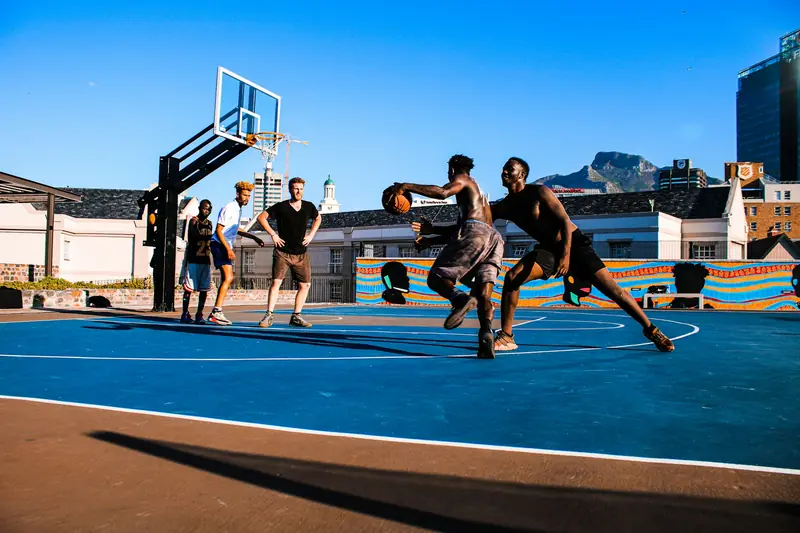
You know the player. Not the tallest, not the fastest, and somehow always open. They get to the rim in two dribbles, they never seem to get caught on a switch, and in the last ten minutes of the night they are still hitting free throws while everyone else is shooting bricks with their arms.
That player is not doing anything magic. They have good basics: a low stance, a quick first step, a shot that starts in the legs, and a body that can stop as well as it can go. This guide walks through the moves that matter in pickup and league basketball, what each one is for, how to do it, the classic mistakes, and what you can do off court to make it easier on your body. Where the research has something useful to say, we say it, and every number links to the study it comes from.
The big idea: basketball is a stopping sport
Watch a game and you see sprints and jumps. Look closer and you see stopping. Players spend most of a game working hard, at around 85% of their maximum heart rate, in short bursts of sprinting, shuffling and jumping, and their output drops in the last quarter.[1] Across team sports like basketball, players make more hard decelerations than hard accelerations.[2] Braking, not speed, is what the game asks of your legs most often.
The second thing worth knowing is comforting. Elite players actually cover less ground than less experienced ones, at lower average speeds and heart rates.[3] They are not running more, they are wasting less: better positioning, fewer wasted steps, cleaner stops. That is good news for anyone over 30. Most of what makes a good pickup player can be learned and trained.
Stance and defence: sit down and slide
Everything starts from the athletic stance: feet a bit wider than your shoulders, hips back and knees bent, chest up, weight on the balls of your feet. On defence, the slide keeps you between your player and the basket. The closeout is the sprint-then-brake to reach a shooter in time to bother the shot without flying past.
How to do it:
- Sit in a chair. Hips back, chest up, heels light
- Stay level. If your head bobs up and down while you slide, you are losing time
- Push, don't step. Push off the trailing foot and reach with the lead foot, and keep your feet from clicking together
- Move your feet, not your hands. Reaching in is how you foul and get beaten
- On a closeout, sprint two thirds of the way, then chop your feet for the last third. Hips down, hand up, ready to slide if they fake
The classic mistake is standing tall with your weight on your heels. The other is flying past a shooter on a closeout, so one pump fake beats you. And a myth worth dropping: "never cross your feet" holds for a step or two, but over a longer distance, or once you've been beaten, turning and running is faster.[4]
Train it off court. Holding a low stance for a whole possession is strength endurance in the hips and thighs: split squats, goblet squats and wall sits. Sliding needs strong inner and outer hips: lateral lunges, Copenhagen planks and banded side walks. The closeout chop is braking, so practise sprint-and-stop drills where you stop within three steps.
The first step, the crossover and the stop
The first step decides whether you beat your defender. A crossover switches the ball from one hand to the other to change direction, and a hesitation is a fake slow-down that freezes the defender before you go again. All of them depend on the least glamorous skill in basketball: stopping hard and pushing off again.
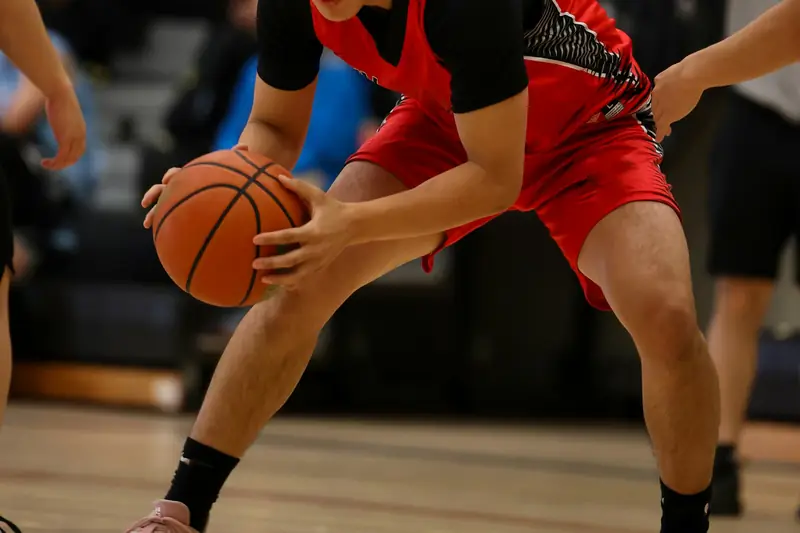
How to do it:
- Nose over toes. On the first step, lean so your head is over your lead foot. A huge step out in front actually slows you down[5]
- Quick to the floor. Get the first foot down fast so the second step comes quickly
- Stay low through the crossover. Keep the ball below your knees and close to your body
- Sell the hesitation with your eyes and shoulders, then push off
- Brake low and wide. Drop your hips, widen your base and take a few short braking steps instead of one stiff-legged plant
The classic mistake is popping up out of the crossover, which gives the defender time to recover. The one that matters most for your knees is braking on one straight leg with the knee caving inward. That inward collapse is the classic pattern of non-contact knee injuries.[6]
Train it off court. Braking is your thighs and glutes working while they lengthen, so slow-lowering split squats and deceleration drills build it. For the first step, add broad jumps, lateral bounds and sled pushes. Single-leg strength (rear-foot elevated split squats, single-leg Romanian deadlifts) teaches the knee to stay over the toes when you stop.
Jumping, landing and the box-out
Jumping is load and explode: dip, swing your arms and push through the floor. Landing is the half most people skip, and it is where most injuries happen. In a study of mostly recreational players, landing caused 45% of ankle injuries.[7] The classic sprain is landing on someone else's foot.[8] Boxing out means finding your player and sealing them behind you before you jump for the rebound.
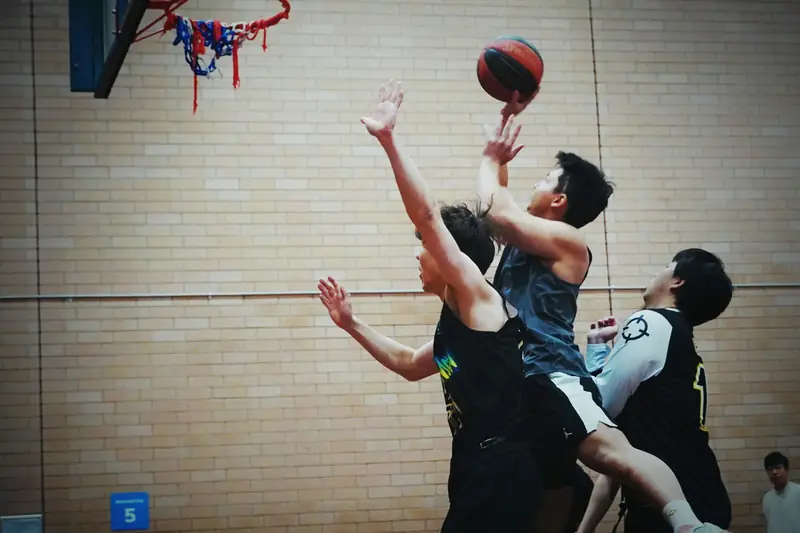
How to do it:
- Land like a cat. Soft and quiet, through the balls of your feet, hips and knees bending to soak it up
- Knees over toes, not in
- Land on two feet when you can, with your chest over your knees rather than leaning back
- Swing your arms on take-off. They add height
- On the box-out: find your player, then find the ball. Make contact, turn, sit low and wide, arms up, then go and get it
The classic mistakes are landing stiff-legged, landing with the knees caving in, and drifting under a shooter so you land on their feet. In a study of female athletes, the ones who later tore a knee ligament had landed with their knees collapsing inward much more.[6]
Train it off court. Plyometric training reliably improves jump height in basketball players.[9] Build a strength base first (squats, trap-bar deadlifts and hip thrusts), then add landing drills: drop and stick, jump and stick in different directions, and finally single-leg sticks. Heavy, slow calf raises and leg presses build the tendons that take the pounding.
Shooting: it starts in your legs
A good shot is the same motion every time. Your legs supply the power and your arm supplies the direction. Coaches teach it with BEEF: balance, eyes, elbow, follow-through.
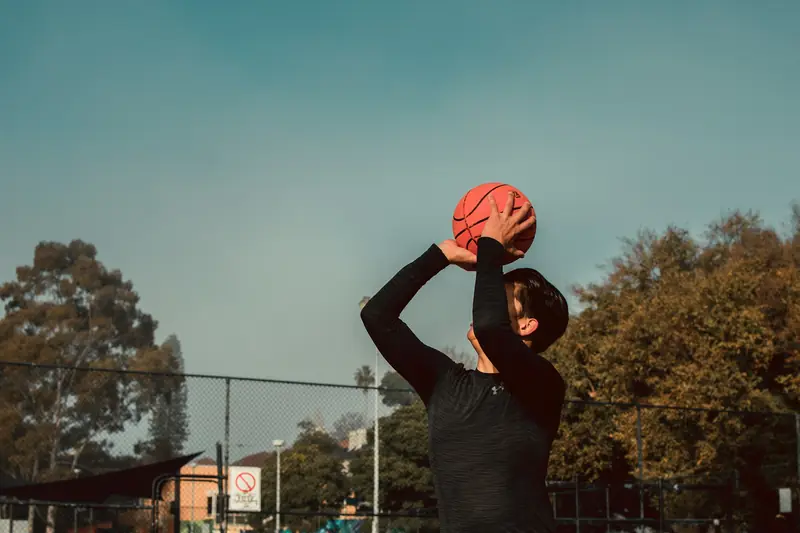
How to do it:
- Balance: feet about shoulder width, toes towards the rim, knees bent
- Eyes: pick one target on the rim and keep your eyes on it
- Elbow: under the ball and in line with the hoop, not flared out
- Follow-through: snap the wrist, fingers pointing down, and hold the finish until the ball lands
- Shoot from the floor up. Dip and rise in one smooth motion, so the ball leaves your hand as your legs straighten
Give the ball some arc. Shot-tracking data suggests the ball should drop into the hoop at around 45 degrees, and flat shots are the common miss.[10] Expect your accuracy to fall as you move back: in one study of expert shooters it dropped from 59% close in to 37% from long range.[11]
At the free-throw line, keep your routine. In NBA playoff games, players made about 84% of free throws when they followed their usual routine and about 71% when they changed it. How long the routine took made no difference.[12]
The classic mistake is arm-only shooting. With no knee bend, the shot falls short, especially late in the game. Tiredness is a big part of it: a 2025 review found that physical fatigue lowers shooting accuracy, and three-pointers suffer most when players are very tired.[13]
Train it off court. Leg strength and conditioning protect your shot late in a game: squats, jump squats and interval work. Shoulder and wrist endurance helps too, with band external rotations and wrist work. And shoot when you're tired: sprint a few lengths, then take your free throws.
Layups, the euro step and cutting
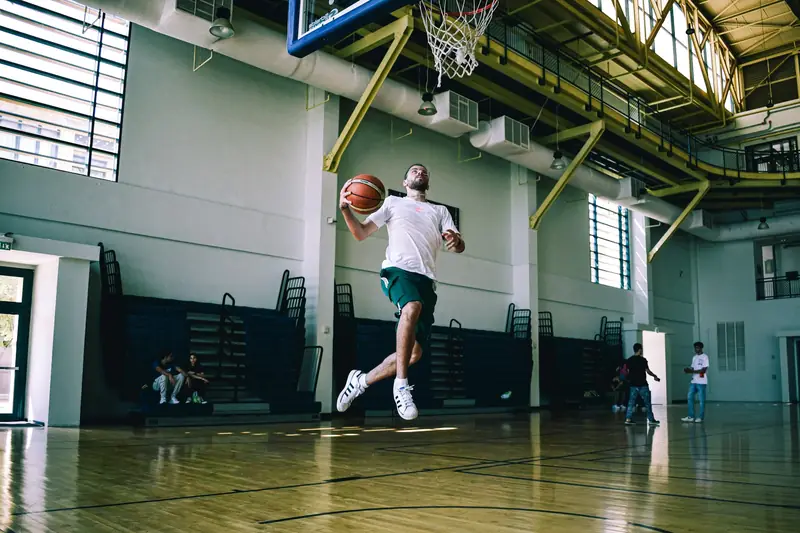
The layup is the highest-percentage shot in the game, and pickup players miss plenty of them by rushing. For a right-handed layup it's right, left, up: the last step is on your left foot, and your right knee and right hand go up together. The euro step is a two-step gather that goes one way, then the other, to get around a defender. Cutting is moving without the ball to get open, and it is mostly about changing speed and planting well.
How to do it:
- High hand, high knee. Take off from the foot opposite your shooting hand
- Aim for the top corner of the square on the backboard, not the rim
- At speed, use a soft underhand finger roll
- On the euro step, sell the first step with your eyes and shoulders, then take a long second step the other way. Keep the ball high and away from the defender
- Cut with a change of pace. Walk your defender down, then plant on a short step and explode
The classic mistakes are taking off from the wrong foot, banking the ball too hard, and cutting at one lazy speed.
Train it off court. One-foot take-offs need single-leg power and springy ankles: step-ups with a knee drive, single-leg box jumps, skipping for height and single-leg calf raises. Finishing through contact needs a strong trunk, so add Pallof presses, carries and planks. For the euro step and cuts, lateral lunges, skater bounds and the braking drills from earlier.
Lasting four quarters
Pickup basketball is a real workout. Your heart rate stays high the whole time, with short bursts broken up by jogging and stoppages, and activity drops off in the last quarter.[1] When the legs go, the technique goes with them: the shot falls short, you stop sliding and start reaching, and you land badly.
The classic mistake is relying on games alone to get fit, or doing only long, slow cardio that never trains repeated sprints.
Train it off court. Train in bursts: shuttle runs or bike intervals of 10 to 30 seconds hard with short recoveries match the game better than long steady jogs. Add two strength sessions a week so your legs hold their shape late in the game. And if you're coming back after a break, build your minutes up over several weeks instead of jumping straight into a full night of games.
Does training off court really help?
For ankles, yes. A review of injury-prevention programmes in basketball found they roughly halved the odds of ankle sprains and cut lower-body injuries overall. The same review found no clear effect on knee ligament tears in basketball alone.[14] Across sports, though, prevention programmes cut knee ligament injuries by about half, and by about two thirds for non-contact injuries in women.[15] More broadly, strength training is the single most effective way exercise has been shown to prevent sports injuries.[16]
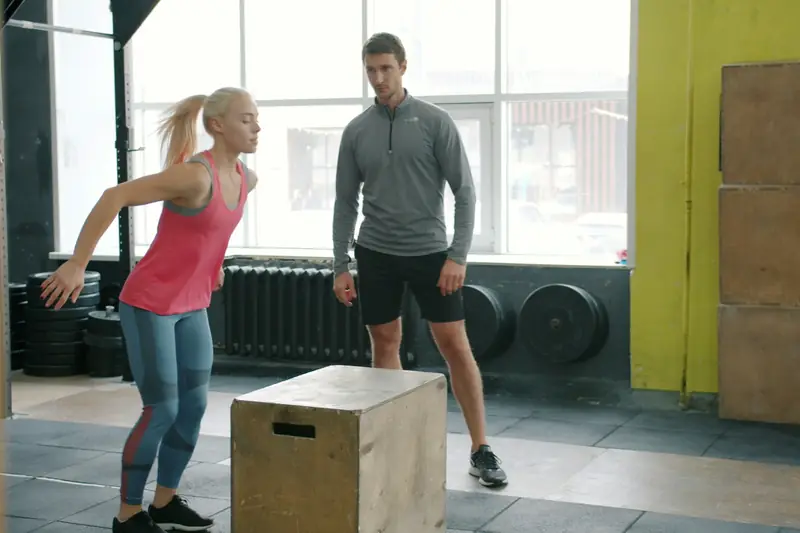
One honest caveat: most of these trials were in teenagers and young athletes, not 40-year-olds in a Tuesday league. But the principle carries over. Stronger legs, better landings and a body used to braking give your basketball more to work with.
Two short sessions a week alongside your games is plenty to start. Here is how the work lines up with the moves:
| Build this | It helps your | Try |
|---|---|---|
| Braking strength | Stops, closeouts, cuts | Slow-lowering split squats, sprint-and-stop drills |
| Sideways strength | Defensive slides, the euro step | Lateral lunges, Copenhagen planks, banded side walks |
| Jump and landing | Rebounds, layups, shot blocking | Box jumps, drop and stick, single-leg sticks |
| Calves and ankles | Every first step and landing | Calf raises (straight and bent knee), pogo hops, single-leg balance |
| Trunk strength | Finishing through contact | Pallof presses, carries, planks |
| Repeated sprints | The fourth quarter | 10 to 30 second shuttles or bike intervals |
Staying on court
Three body parts take most of the punishment in basketball: ankles, knees and the Achilles.
Ankles. Court sports have the highest rate of ankle sprains of any type of sport.[17] The biggest risk factor is a previous sprain: in recreational players it raised the odds of another ankle injury about five times.[7] If you've sprained an ankle before, two things have good evidence. A lace-up or semi-rigid brace cut ankle injuries by about two thirds in a large trial of school players[18], and in adults aged 18 to 70 who had recently sprained an ankle, wearing a brace for sport led to fewer repeat sprains (15%) than balance training alone (27%).[19] Balance training helps too, most clearly in players with an old sprain.[20]
Knees. Jumper's knee, a sore spot just below the kneecap, is common in basketball: about a third of national-level players in one study had symptoms at the time.[21] Strong thighs and gradual increases in how much you jump help. If knee pain sticks around for more than a couple of weeks, get it checked rather than playing through it.
The Achilles. This is the weekend player's injury. In one large US series, basketball caused about a third of all Achilles tendon ruptures, more than any other sport, and the average patient was 46.[22][23] Nobody has yet proved that calf training prevents ruptures, but strong calves and a gradual return after time off are sensible. The classic story is the player who hasn't played for months and goes straight back into a full-speed game.
The long game
Basketball is worth keeping in your life. In a study of untrained men aged 20 to 42, three months of street basketball about twice a week raised their fitness, added muscle and bone, and lowered their blood pressure and body fat.[24] And it doesn't feel like hard work: in a small study of inactive women, a game of 3x3 pushed heart rates higher than an interval workout, while the players rated it as easy and enjoyed it more.[25] The off-court work in this guide is what keeps you on the court long enough to collect all that.
Training built around your basketball
Most pickup players never do any of this, not because they don't care, but because it's hard to know where to start. A generic gym plan doesn't know you play twice a week, that your left ankle has gone over twice, or that you only have a pair of dumbbells at home.
Achilles does. Pick a goal such as Stop getting injured or Play my sport better, and tell it how often you play, the time and equipment you have, and anything that bothers you, from a cranky knee to an old ankle sprain. Achilles builds your plan from a library of sports-science research: the warm-up, the work for your legs, ankles, calves and trunk, and how to progress it, each exercise with its sets, reps and rest, and the studies behind it.
Log your sessions and your games, and the plan moves with you, so you keep getting stronger without overdoing the weeks you play the most.
See how Achilles worksFurther reading
- Stojanović E. et al. (2018). The activity demands and physiological responses encountered during basketball match-play: a systematic review. Sports Medicine, 48(1). Link
- Harper D.J., Carling C. & Kiely J. (2019). High-intensity acceleration and deceleration demands in elite team sports competitive match play: a systematic review and meta-analysis. Sports Medicine, 49. Link
- Petway A.J. et al. (2020). Training load and match-play demands in basketball based on competition level: a systematic review. PLoS ONE, 15(3). Link
- Breakthrough Basketball. Improving defensive quickness and debunking the "don't cross your feet" myth. Link
- Breakthrough Basketball. How to develop an explosive first step. Link
- Hewett T.E. et al. (2005). Biomechanical measures of neuromuscular control and valgus loading of the knee predict anterior cruciate ligament injury risk in female athletes. American Journal of Sports Medicine, 33(4). Link
- McKay G.D. et al. (2001). Ankle injuries in basketball: injury rate and risk factors. British Journal of Sports Medicine, 35(2). Link
- Cumps E., Verhagen E. & Meeusen R. (2007). Prospective epidemiological study of basketball injuries during one competitive season. Journal of Sports Science and Medicine, 6(2). Link
- Ramirez-Campillo R. et al. (2022). The effects of plyometric jump training on physical fitness attributes in basketball players: a meta-analysis. Journal of Sport and Health Science, 11(6). Link
- Noah Basketball. The science of shooting arc (shot-tracking company data). Link
- Okazaki V.H.A. & Rodacki A.L.F. (2012). Increased distance of shooting on basketball jump shot. Journal of Sports Science and Medicine, 11(2). Link
- Lonsdale C. & Tam J.T.M. (2008). On the temporal and behavioural consistency of pre-performance routines: elite basketball players' free throw shooting accuracy. Journal of Sports Sciences, 26(3). Link
- Li et al. (2025). Changes in shooting accuracy among basketball players under fatigue: a systematic review and meta-analysis. Frontiers in Physiology, 16. Link
- Taylor J.B. et al. (2015). Prevention of lower extremity injuries in basketball: a systematic review and meta-analysis. Sports Health, 7(5). Link
- Webster K.E. & Hewett T.E. (2018). Meta-analysis of meta-analyses of anterior cruciate ligament injury reduction training programs. Journal of Orthopaedic Research, 36(10). Link
- Lauersen J.B., Bertelsen D.M. & Andersen L.B. (2014). The effectiveness of exercise interventions to prevent sports injuries. British Journal of Sports Medicine, 48(11). Link
- Doherty C. et al. (2014). The incidence and prevalence of ankle sprain injury: a systematic review and meta-analysis of prospective epidemiological studies. Sports Medicine, 44(1). Link
- McGuine T.A., Brooks A. & Hetzel S. (2011). The effect of lace-up ankle braces on injury rates in high school basketball players. American Journal of Sports Medicine, 39(9). Link
- Janssen K.W., van Mechelen W. & Verhagen E.A.L.M. (2014). Bracing superior to neuromuscular training for the prevention of self-reported recurrent ankle sprains. British Journal of Sports Medicine, 48(16). Link
- McGuine T.A. & Keene J.S. (2006). The effect of a balance training program on the risk of ankle sprains in high school athletes. American Journal of Sports Medicine, 34(7). Link
- Lian Ø.B., Engebretsen L. & Bahr R. (2005). Prevalence of jumper's knee among elite athletes from different sports. American Journal of Sports Medicine, 33(4). Link
- Raikin S.M., Garras D.N. & Krapchev P.V. (2013). Achilles tendon injuries in a United States population. Foot & Ankle International, 34(4). Link
- Alegre B. et al. (2021). The Achilles tendon rupture in basketball: systematic review of the present literature. The Surgery Journal, 7(3). Link
- Randers M.B. et al. (2018). Effects of 3 months of full-court and half-court street basketball training on health profile in untrained men. Journal of Sport and Health Science, 7(2). Link
- Golluceli et al. (2025). Physiological, perceived, and physical demands of recreational 3 × 3 basketball and high-intensity interval training in sedentary adult women. Biology of Sport, 42(4). Link